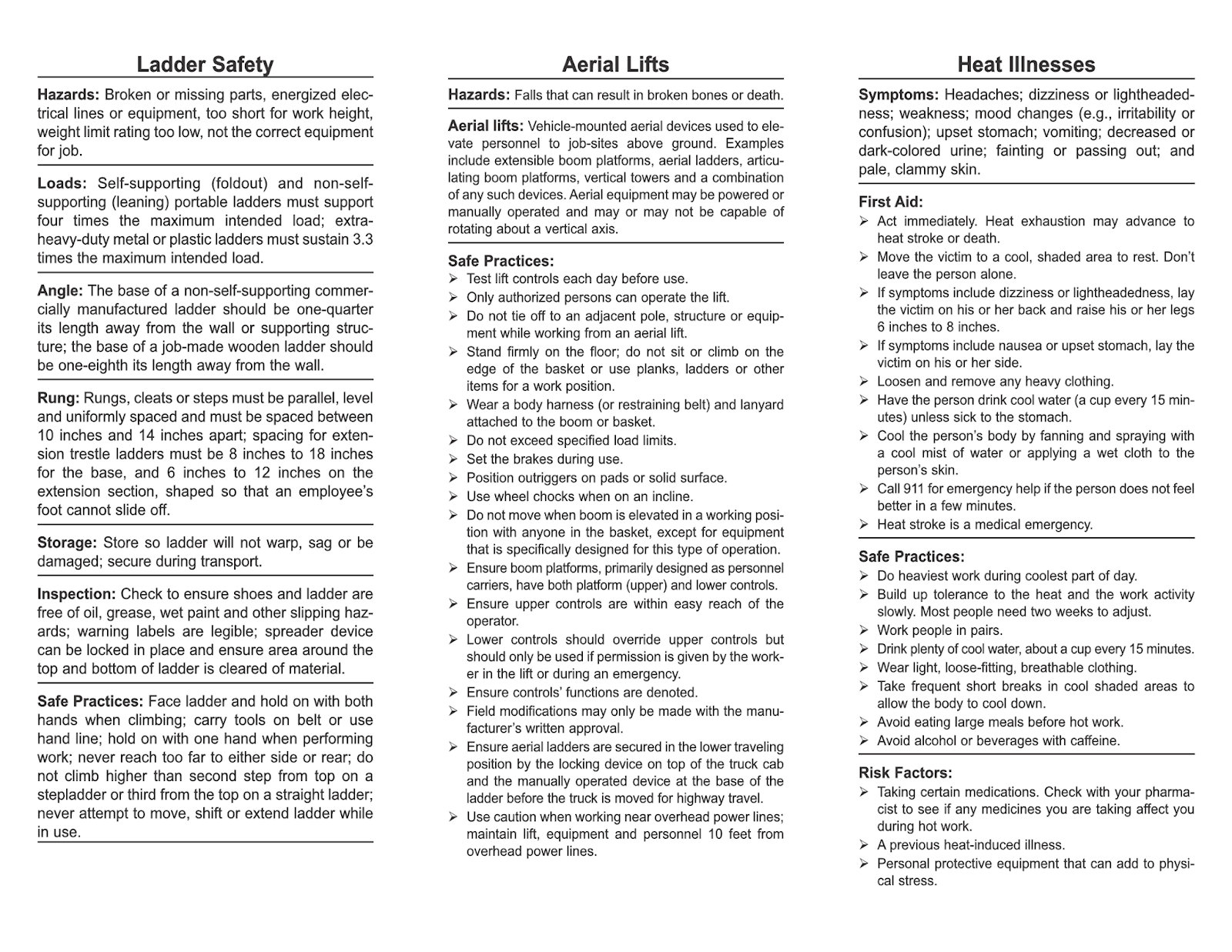
Workplace accidents don’t happen because teams ignore safety entirely—they happen when attention slips on the small, routine details. That’s where daily toolbox talks bridge the gap: short, focused safety discussions that keep risks top of mind. But finding fresh, relevant, and free safety topics for daily toolbox talks in accessible formats—especially PDF—can be a constant challenge for supervisors and safety officers.
The best toolbox talks aren’t recycled lectures. They’re actionable, relatable, and easy to deliver—even on a hectic job site. This guide delivers exactly that: a curated collection of free safety topics ideal for daily use, available in ready-to-print or shareable PDF formats. More importantly, it shows you how to use them effectively, avoid common pitfalls, and keep your team engaged without reinventing the wheel every day.
Why Daily Toolbox Talks Matter—And Why
Most Fail
Toolbox talks are meant to be brief (5–10 minutes), interactive conversations about specific hazards, procedures, or near misses. When done well, they reduce incidents, reinforce training, and build a culture where safety is a shared responsibility.
But most fail because they become: - Repetitive: Same topics, same delivery, every month. - Preachy: One-way monologues instead of team discussions. - Irrelevant: Generic content that doesn’t match the day’s work. - Forgotten: No follow-up, documentation, or accountability.
The solution isn’t more time—it’s better material. Free safety topics in PDF format eliminate the prep burden. But not all PDFs are created equal. The best ones include discussion prompts, real-world scenarios, and visual aids—not just bullet points.
What Makes a Good Free Safety Topic PDF?
A high-quality toolbox talk PDF should be: - Specific: Focused on one hazard (e.g., “Ladder Safety” not “General Safety”). - Actionable: Includes clear do’s and don’ts. - Visual: Uses icons, diagrams, or photos to reinforce key points. - Engagement-Driven: Has questions like “What would you do if…?” - Print-and-Go: One or two pages max, with space for attendee sign-in.
Many free PDFs online miss the mark—overloaded with legal disclaimers or too vague to spark real discussion. The best ones are lean, practical, and designed for real-world use.
Top 7 Free Safety Topics for Daily Toolbox Talks (PDF Ready)
Here are seven high-impact, downloadable safety topics that consistently resonate with crews. Each is widely available in PDF format from reputable sources like OSHA, NIOSH, and industry associations.
#### 1. Slip, Trip, and Fall Prevention One of the most common causes of workplace injuries. A good PDF covers: - Housekeeping best practices - Proper footwear - Lighting and clutter control - Real example: “A worker tripped over a coiled extension cord—what could’ve prevented this?”
Ideal for construction, warehouses, and manufacturing floors.
#### 2. Hand Safety Hands are involved in nearly every task—and at high risk. Topic highlights: - Common hazards: pinching, cuts, chemical exposure - Glove selection guide (latex vs. nitrile vs. cut-resistant) - Machine guarding reminders

Use case: After a minor laceration incident, run this talk to reinforce PPE compliance.
#### 3. Electrical Safety Basics Critical for electricians, maintenance crews, and field technicians. Key points: - Lockout/Tagout (LOTO) refresher - Recognizing damaged cords and outlets - Safe distances from power lines
Bonus: Include a quick quiz—“Is this outlet safe to use?” with a photo.
#### 4. Heat Stress Awareness Often overlooked until someone collapses. A solid PDF includes: - Early signs (dizziness, nausea) - Hydration tips - Buddy system protocol
Best delivered before summer or in enclosed workspaces.
#### 5. PPE Inspection and Use Not all PPE is created equal—and worn-out gear fails. Cover: - Daily inspection checklist (cracks, straps, seals) - Proper fit (e.g., hard hat suspension gaps) - Common excuses (“It’s too hot”) and rebuttals
Real mistake: A worker skipped safety glasses “for 30 seconds”—result: eye injury.
#### 6. Safe Lifting Techniques Back injuries cost millions annually. A focused talk should include: - The “power zone” (waist to shoulders) - Team lifting cues - Use of mechanical aids
Add a quick demo—have someone lift incorrectly, then correctly.
#### 7. Emergency Response Overview Not just fire drills. This topic covers: - Site-specific evacuation routes - First aid kit locations - How to report an incident
Use this monthly—rotate which emergency scenario you discuss (fire, chemical spill, medical).
Where to Find Trusted Free PDFs (No Registration Required)
You don’t need a paid subscription or corporate account to get quality materials. These sources offer immediate, no-nonsense downloads:
| Source | What They Offer | Access Notes |
|---|---|---|
| OSHA.gov | Dozens of free safety topics with bilingual PDFs | No email required; direct download |
| NIOSH (CDC) | Research-backed talks on emerging risks (e.g., silica, fatigue) | Industry-specific packs available |
| Construction Safety Council | Toolbox talk library by trade (electrical, rigging, scaffolding) | Free membership gives full access |
| SafeWork Australia | Clear, visual PDFs with discussion prompts | Downloadable without signup |
| Canadian Centre for Occupational Health and Safety (CCOHS) | Multilingual PDFs, hazard-specific | Free registration for full access |
Avoid sites that require endless forms or upsell software. Stick to government and nonprofit sources—they’re more likely to be neutral and practical.
How to Run an Effective Toolbox Talk (Even in 7 Minutes)
Having a PDF isn’t enough. Delivery determines impact. Follow this workflow:
- Pick the Right Topic
- Match it to the day’s work. If crews are setting up scaffolding, talk about fall protection—not fire extinguishers.
- Print or Project the PDF
- Have a copy for each attendee or display key visuals. Engagement drops when only the foreman can see the material.
- Start with a Real Incident
- “Last week at a site in Ohio, a worker fell 12 feet because the harness wasn’t anchored. Let’s talk why that happens—and how we stop it.”
- Ask, Don’t Tell
- Instead of “Always wear gloves,” ask, “Where on this job are your hands most at risk?”

- Document Attendance
- Use the sign-in sheet on the PDF. OSHA doesn’t require it, but it proves due diligence if an incident occurs.
- Follow Up
- Walk the site after the talk. Reinforce—“I noticed you anchored your harness—good job.”
Common Mistakes to Avoid
Even with great PDFs, poor execution undermines safety culture.
- Holding Talks in Bad Weather
- Rain or extreme heat distracts crews. Move indoors or reschedule.
- Skipping Because “Nothing Changed”
- Routine is the enemy of awareness. Do the talk anyway—rotate who leads it.
- Using Outdated PDFs
- Check revision dates. A 2010 LOTO guide might miss new standards.
- Treating It as a Checkbox
- If your crew sees it as “just signing a sheet,” you’ve lost the purpose.
- Never Repeating Topics
- People forget. Revisit critical topics like fall protection every 6–8 weeks.
Customize Free PDFs for Your Team
The best talks feel personal. Customize your free safety topics with:
- Site Photos
- Edit the PDF (if allowed) to include images of your workspace. “This is our ladder storage—what hazards do you see?”
- Local Incident Reports
- Add a brief note: “Last month, Site B had a near miss with overhead power lines. Let’s review clearance zones.”
- Crew Input
- Rotate who picks the weekly topic. Workers often know the real risks better than management.
Many free PDFs are in editable formats (Word or PDF with form fields), so you can brand them with your company logo and emergency contacts.
Make Safety a Conversation, Not a Lecture
Free safety topics for daily toolbox talks in PDF format are more than handouts—they’re tools to drive real behavior change. But they only work when used thoughtfully. Choose relevant subjects, deliver them interactively, and connect them to your team’s daily reality.
Don’t aim for perfection. Aim for consistency. A two-minute talk on glove use, repeated monthly, sticks deeper than an annual 90-minute seminar.
Download a few PDFs today from OSHA or SafeWork. Print one. gather your crew tomorrow morning. Point to a real hazard. Ask a question. Listen.
That’s how safety culture grows—one toolbox talk at a time.
FAQ
Where can I download free toolbox talk PDFs legally? Reputable sources include OSHA.gov, NIOSH, SafeWork Australia, and CCOHS. These offer free, no-registration downloads.
Are toolbox talks required by OSHA? Not explicitly, but OSHA requires employers to train workers on hazards. Daily talks are a recognized way to meet this obligation.
How long should a toolbox talk be? Aim for 5 to 10 minutes. Long enough to cover one topic, short enough to hold attention.
Can I edit free PDF toolbox talks? Some are editable (e.g., from Construction Safety Council). Others are locked. Always check usage rights.
Should all employees attend? Yes, especially those involved in the day’s high-risk tasks. Subcontractors should also participate.
What should be included in a toolbox talk record? Date, topic, attendees’ names/signatures, and facilitator’s name. Keep records for at least one year.
How often should toolbox talks be held? Daily or weekly, depending on risk level. High-hazard sites should do them daily.
FAQ
What should you look for in Free Safety Topics for Daily Toolbox Talks PDF Guide? Focus on relevance, practical value, and how well the solution matches real user intent.
Is Free Safety Topics for Daily Toolbox Talks PDF Guide suitable for beginners? That depends on the workflow, but a clear step-by-step approach usually makes it easier to start.
How do you compare options around Free Safety Topics for Daily Toolbox Talks PDF Guide? Compare features, trust signals, limitations, pricing, and ease of implementation.
What mistakes should you avoid? Avoid generic choices, weak validation, and decisions based only on marketing claims.
What is the next best step? Shortlist the most relevant options, validate them quickly, and refine from real-world results.