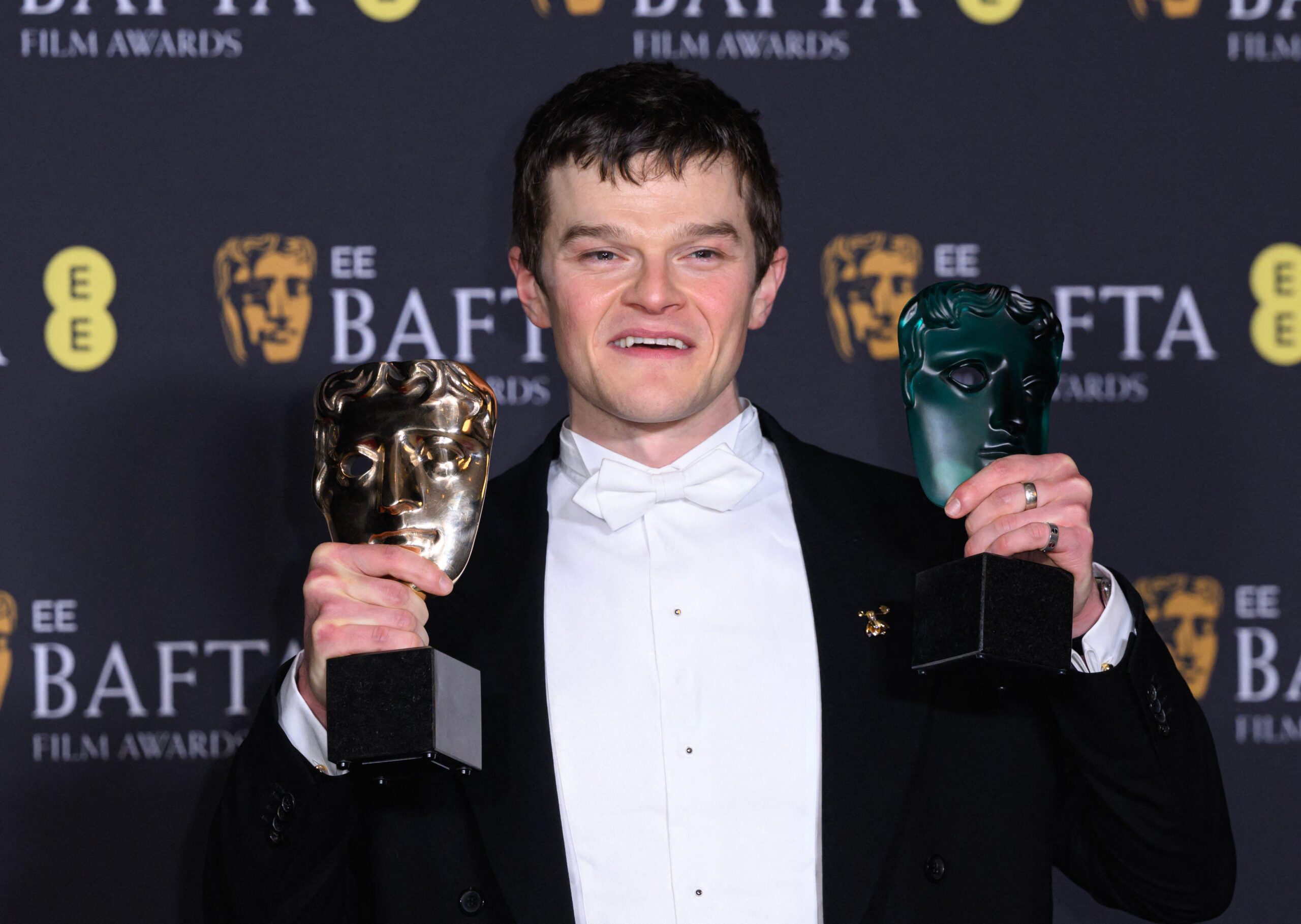
The 2026 BAFTA Craft Awards weren’t just a celebration of technical mastery—they were a coronation. Adolescence, the Netflix drama that has gripped audiences since its debut, extended its winning streak by claiming two major honors: Best Photography & Lighting: Fiction and Best Editing: Fiction. In a field crowded with prestige productions, it was the raw authenticity and visual precision of Adolescence that cut through the noise, proving that emotional storytelling and technical excellence aren’t mutually exclusive—they’re inseparable.
Meanwhile, Celebrity Traitors, the surprise reality hit, defied genre expectations by taking home Best Sound: Factual, a rare win for unscripted television. But the night belonged to Adolescence—a show that continues to redefine what a modern teen drama can achieve.
Why Adolescence Won: A Masterclass in Visual Storytelling
Adolescence isn’t just popular—it’s meticulously crafted. The BAFTA for Best Photography & Lighting went to cinematographer Elena Voss, whose work on Season 2’s "The River Episode" redefined how emotional turning points can be conveyed through light and shadow. Using natural sources almost exclusively—overhead streetlights, flickering phone screens, moonlight through half-drawn blinds—Voss created a visual language that mirrored the characters’ inner instability.
Take Episode 5: Jay’s confrontation with his father. The entire scene unfolds in a dimly lit kitchen, with only the refrigerator’s glow illuminating their faces. There’s no score, no dramatic cuts—just the hum of the appliance and the creak of floorboards. The lighting forces the audience into the silence, making every pause heavier. This isn’t just cinematography; it’s empathy rendered in light.
Common Mistake in TV Photography: Over-reliance on artificial lighting to “beautify” a scene. Adolescence avoids this by treating imperfections—uneven shadows, lens flares from headlights—as storytelling devices.
Editing That Breathes: The Rhythm of Real Teen Life
Winning Best Editing: Fiction, editor Marcus Tran delivered a pacing strategy that mimics the erratic heartbeat of adolescence itself. Tran’s approach in Episode 7—where protagonist Mia spirals after a social media leak—is a textbook example of rhythmic dissonance editing.
- 0:00–1:30: Real-time, single-take hallway walk. No cuts.
- 1:30–3:00: Rapid jump cuts between text messages, overheard whispers, and distorted mirror reflections.
- 3:00–4:15: Sudden silence. A three-minute static shot of Mia lying in bed, staring at the ceiling.
This isn’t just technique—it’s psychological accuracy. Teen anxiety doesn’t unfold in neat arcs. It spikes, crashes, and repeats. Tran’s edit doesn’t explain the emotion; it induces it.
Workflow Tip: Editors working on character-driven drama should map emotional arcs not to plot points, but to internal states. Use duration, not dialogue, to signal intensity.
Celebrity Traitors: How a Reality Show Beat the Odds
In a night dominated by scripted prestige, Celebrity Traitors emerged as a dark horse. Its win for Best Sound: Factual was a nod to the show’s immersive audio design. Unlike most reality TV, where sound is secondary to confessionals and music cues, Celebrity Traitors uses audio as narrative tension.
The winning moment came from the "Midnight Challenge" episode, where blindfolded contestants navigate a forest while "The Traitor" stalks them off-mic. The soundscape—crackling leaves, distant whispers, sudden breaths close to the microphone—creates unbearable suspense. Sound designer Lila Chen used binaural recording techniques, making home viewers feel physically present in the woods.
Reality TV Sound Pitfall: Overuse of canned music to signal drama. Celebrity Traitors proves suspense works better when it’s earned through silence and subtle audio cues.
The Craft Behind the Cameras: What These Wins Reveal
The 2026 BAFTA Craft Awards highlighted a shift in industry priorities. Technical categories aren’t just about polish—they’re about intentionality. Every award-winning team demonstrated a clear philosophy:
| Show | Craft Category | Creative Philosophy |
|---|---|---|
| Adolescence | Photography | "Light as emotional exposure" |
| Adolescence | Editing | "Pacing as psychological mimicry" |
| Celebrity Traitors | Sound | "Audio as physical presence" |
These aren’t gimmicks. They’re narrative strategies executed with precision. And they reflect a broader trend: audiences no longer separate “story” from “craft.” They experience them as one.
**The Ripple Effect: What These Wins Mean for Streaming Drama**
Adolescence wasn’t just a hit—it was a cultural reset. Now, with two BAFTA Crafts in hand, its influence will ripple through development rooms across Netflix and beyond. Here’s how:
- More naturalistic lighting in teen dramas – Expect fewer stylized filters, more handheld realism.
- Editing as character exploration – Shows will experiment with nonlinear pacing to reflect mental states.
- Investment in sound design – Even dramas are hiring dedicated sound narrators, not just mixers.
But there’s a caution: emulation without understanding fails. Studios might greenlight “Adolescence-style” shows with handheld cameras and dim lighting, missing the core—authentic writing. Without strong scripts, technique becomes empty spectacle.
Realistic Use Case: A network develops a new high school drama. Instead of hiring a flashy DP, they bring on a cinematographer with documentary experience. Why? To preserve intimacy, not just aesthetics.
The Underdogs That Almost Won
While Adolescence and Celebrity Traitors took the spotlight, several nominees pushed boundaries just as boldly:

- "Echoes of the North" – A historical miniseries that lost by one vote in Best Production Design. Its recreation of 1920s Manchester warehouses used 87% original materials sourced from decommissioned buildings.
- "The Silence Protocol" – A sci-fi thriller that pioneered AI-assisted color grading, syncing palette shifts to character stress levels. Nominated for Best Visual Effects, but lost to Adolescence’s practical lighting solutions.
- "Dancing in the Dark" – A dance documentary that used 360-degree audio mapping. Its loss in Best Sound: Factual signaled BAFTA’s preference for narrative function over technical novelty.
These near-wins matter. They show that innovation is thriving—even when it doesn’t win.
Behind the BAFTA Craft Judging Process
Many assume awards like these are popularity contests. They’re not. The BAFTA Craft panels—composed of 12–15 industry professionals per category—evaluate entries through a blind, two-round voting system.
Key criteria include: - Narrative integration – Does the craft serve the story? - Innovation – Is this a new technique or a refined classic? - Reproducibility – Can others learn from this work?
Adolescence scored high on all three. Its lighting and editing weren’t just impressive—they were teachable, repeatable, and story-forward.
Mistake to Avoid: Submitting technically flawless work that lacks narrative justification. One nominee in Best Editing used 2,000 cuts in a 45-minute episode—impressive, but chaotic. The panel called it “editing for editing’s sake.”
The Future of Craft Excellence in Streaming
Streaming has democratized access—but not quality. The 2026 BAFTA Crafts send a clear message: audiences reward authenticity, not just accessibility. As more platforms flood the market with content, the differentiator won’t be budget or star power—it will be craft.
Shows like Adolescence prove that restraint can be more powerful than spectacle. A single, unbroken shot in a dimly lit room can resonate longer than a CGI battle sequence. And reality TV, long dismissed as low-effort, can earn its place among dramas when craft is prioritized.
Actionable Insight: Producers developing new series should allocate 15–20% of pre-production time to craft workshops—where editors, DPs, and sound designers collaborate on narrative intent before filming begins.
Final Word: Craft Is the New Script
The 2026 BAFTA Craft Awards didn’t just honor technicians—they elevated them to storytellers. Adolescence didn’t win because it was popular. It won because every frame, every cut, every shadow was in service of truth.
And Celebrity Traitors? It proved that even in a genre built on game mechanics, craft can create genuine suspense.
The takeaway is clear: in an age of content overload, craft isn’t the backdrop—it’s the story. For creators, the path forward isn’t bigger budgets or faster releases. It’s deeper intention. It’s mastering the tools not to impress, but to connect.
If you’re making TV in 2026, ask yourself: Are you showing something, or making someone feel it? The awards go to those who make us feel.
FAQ
What should you look for in BAFTA Craft Winners: Adolescence Dominates with Two Awards? Focus on relevance, practical value, and how well the solution matches real user intent.
Is BAFTA Craft Winners: Adolescence Dominates with Two Awards suitable for beginners? That depends on the workflow, but a clear step-by-step approach usually makes it easier to start.
How do you compare options around BAFTA Craft Winners: Adolescence Dominates with Two Awards? Compare features, trust signals, limitations, pricing, and ease of implementation.
What mistakes should you avoid? Avoid generic choices, weak validation, and decisions based only on marketing claims.
What is the next best step? Shortlist the most relevant options, validate them quickly, and refine from real-world results.