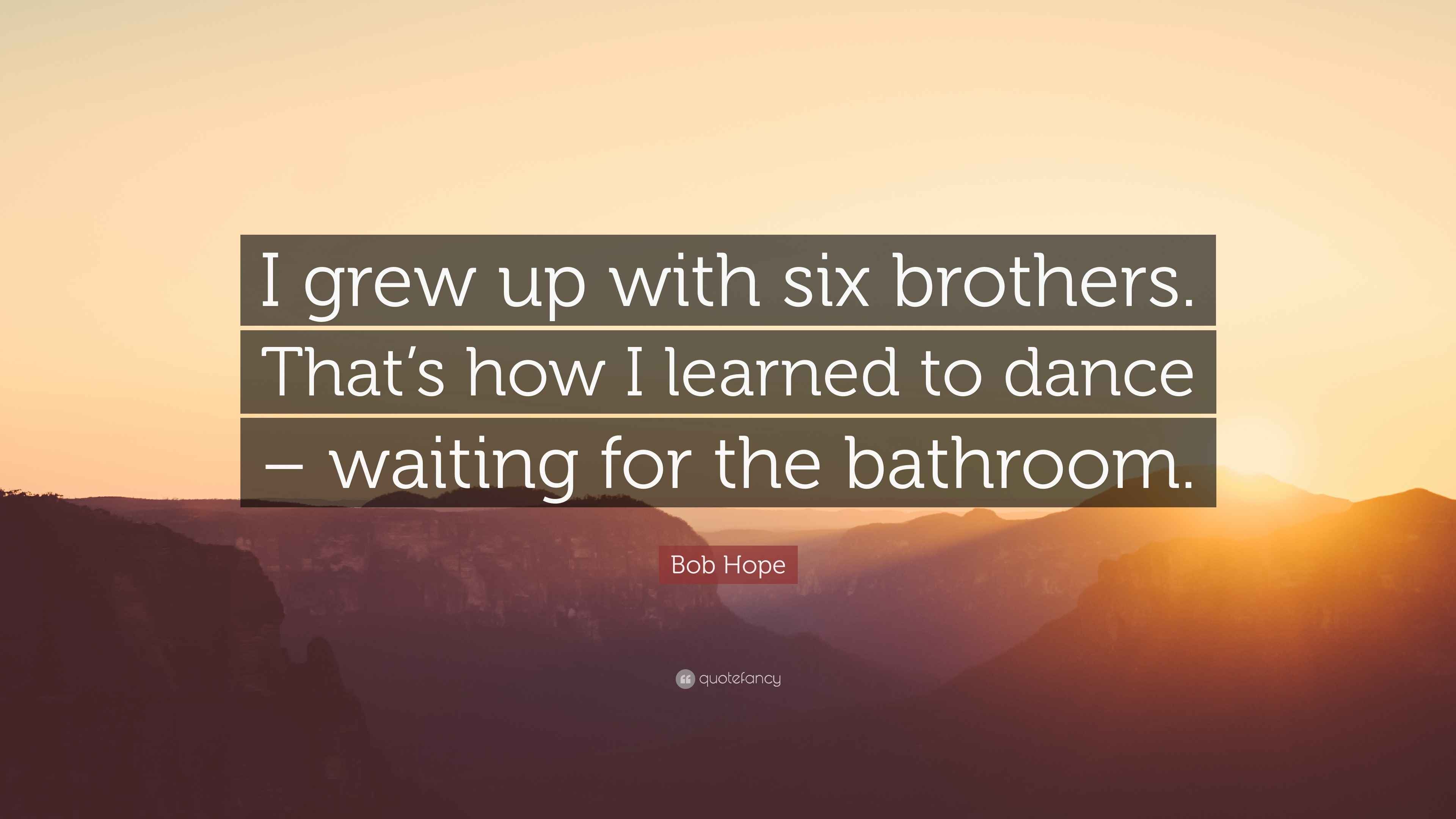
Growing up in a crowded household isn’t just about sharing rooms or fighting over bathroom time—it’s a masterclass in negotiation, timing, and survival. Bob Hope, the legendary American entertainer known for his razor-sharp wit and decades-long career in comedy, once quipped: "I grew up with six brothers—that's how I learned to dance." On the surface, it’s a punchline. But beneath the humor lies a layered truth about relationships, resilience, and the subtle choreography of growing up in a large family.
This single line, often shared as a "quote of the day," transcends mere nostalgia. It captures how early life experiences shape personality, interpersonal skills, and even political views—especially when you’re one of seven boys learning to navigate space, attention, and identity in a tight-knit, competitive environment.
Let’s unpack what this seemingly simple quote reveals about love, aging, and the politics of family life.
The Hidden Meaning Behind “I Learned to Dance”
Bob Hope didn’t train at a ballet academy. He wasn’t referencing formal dance. His "dancing" was metaphorical—a survival tactic born from necessity.
In a home with six brothers, every action had to be timed. You didn’t just walk into a room; you gauged the mood. You didn’t speak over someone; you waited for the pause. You didn’t claim the last piece of pie without consequences. This constant awareness—of body language, tone, hierarchy, and unspoken rules—is the essence of emotional intelligence.
“Dancing” here means adaptability. It’s the ability to move without stepping on toes—literally and figuratively.
For anyone raised in a large family, this resonates. Siblings don’t just share genes; they create a micro-society with its own politics, alliances, and power shifts. Learning to “dance” is learning to read the room before you enter it.
Real-world example: Imagine trying to get your parents’ attention during dinner. One brother dominates the conversation. Another interrupts constantly. You learn to wait for the lull, pitch your voice slightly higher to stand out, or use humor to redirect focus—exactly what Hope mastered on stage decades later.
Brotherhood as a Training Ground for Relationships
Hope’s experience wasn’t unique, but his reflection on it offers insight into how early family dynamics influence adult relationships.
Growing up with six brothers meant constant interaction—no solitude, no escape. Conflicts were immediate, apologies often unspoken, and loyalty tested daily. These conditions forge traits that carry into romantic and professional relationships:
- Conflict resolution: When you can’t avoid someone, you learn to patch things up—fast.
- Shared responsibility: Chores, secrets, reputations—everything was collective.
- Humor as a buffer: Jokes diffused tension. A well-timed quip could prevent a fight.
These aren’t just survival skills—they’re the foundation of emotional maturity.
But there’s a downside. Large families can condition people to suppress individual needs. Hope, despite his public charm, was known for being emotionally reserved in private. Some biographers suggest his humor acted as a shield—a way to keep people close but not too close.
Common mistake: Many assume closeness in large families means deep emotional connection. But proximity doesn’t equal intimacy. You can share a room for 18 years and still not know your brother’s fears.
Hope’s quote hints at this complexity. He learned to dance, not to confess.
Aging, Humor, and the Long Game of Life
As people age, they often look back on their upbringing with new perspective. Hope lived to 100, giving him a rare vantage point on how early lessons play out over a lifetime.
His quote, often shared as a lighthearted “quote of the day,” gains depth when viewed through the lens of aging. The boy who learned to dodge physical and emotional collisions became a man who navigated Hollywood egos, wartime tensions, and shifting cultural norms with wit and grace.
Humor, for Hope, wasn’t just a career tool—it was a coping mechanism refined in childhood. When asked about growing old, he once said, "You know you’re getting old when you stoop to tie your shoelaces and wonder what else you could do while you’re down there."
That same self-deprecating style—honed in the chaos of a full house—allowed him to stay relevant across generations.
Practical takeaway: Aging well isn’t just about health or wealth. It’s about emotional agility. And like Hope’s dancing, that agility is often learned young.
- Did you grow up in a busy household? You likely developed situational awareness early.
- Were you the peacemaker? You may excel in mediation roles.
- The class clown? Humor may be your default under stress.
Recognizing these patterns helps you leverage them—or correct them—later in life.
The Politics of Family: Power, Hierarchy, and Survival
“I grew up with six brothers” isn’t just a family anecdote—it’s a statement about power dynamics.
In any group of seven boys, hierarchies form fast. There’s the oldest, who sets the tone. The youngest, who plays innocent. The rebel, the joker, the overachiever. These roles aren’t assigned; they’re earned, fought for, or stumbled into.
This mirrors political systems in miniature:
- Alliances form: Two brothers team up against the third.
- Negotiation is constant: “I’ll do your chores if you let me borrow your bike.”
- Reputation matters: Once labeled “the clumsy one,” you’re expected to trip—forever.
Hope, as the fifth of seven, occupied a middle ground—visible but not dominant. That position often breeds adaptability. You’re not the leader, not the baby. You survive by reading the room, staying flexible, and mastering timing.
This skill set translated directly into his career. As a performer, Hope relied on timing—knowing when to deliver a punchline, when to pause, when to exit.
In politics—both familial and national—timing is everything.
Limitation to consider: While early exposure to group dynamics builds social intelligence, it can also reinforce competitive mindsets. Some siblings carry lifelong resentment or struggle with trust. Humor, like Hope’s, can mask unresolved tension.
The key is recognizing when your “dance moves” serve you—and when they’re just habits from a crowded past.
Bob Hope’s Legacy: More Than Just a One-Liner
Hope’s quote is frequently shared in isolation, stripped of context. But understanding its roots deepens its value.
Born in 1903 in England and raised in Cleveland, Ohio, Leslie Townes “Bob” Hope grew up in a working-class family with limited resources. His father was a stonemason, his mother a homemaker. Seven boys in one household meant scarcity—of food, space, attention.
Yet from that environment emerged one of the most influential entertainers of the 20th century. His USO tours, radio shows, films, and television specials made him a cultural icon.
His humor—often self-deprecating, observational, and slightly irreverent—was shaped by those early years. He didn’t mock others to elevate himself. He mocked himself to level the playing field.
That’s the deeper lesson in “I learned to dance.” It’s not about outmaneuvering others. It’s about moving through life with awareness, grace, and a sense of timing.
Applying Hope’s Wisdom Today
You don’t need six brothers to benefit from this insight. The principles behind Hope’s quote are universal:
- Read the room before speaking.
- Whether in a meeting, argument, or first date, timing matters.
- Use humor to defuse, not deflect.
- A joke can ease tension—but only if it doesn’t avoid the real issue.
- Adapt, don’t dominate.
- In relationships, flexibility builds trust more than control.
- Recognize your role.
- Are you the peacekeeper? The instigator? The observer? Own it—but don’t be trapped by it.
- Survival skills can become life skills.
- What you learned to survive childhood can help you thrive in adulthood—if you reflect on it.
Workflow tip: Keep a journal for one week. Note moments when you “danced”—times you adjusted your behavior based on others’ moods or reactions. Patterns will emerge. Use them to refine your communication.
Why This Quote Still Resonates
In an age of curated lives and digital personas, Bob Hope’s quote stands out for its authenticity and simplicity. It doesn’t claim wisdom. It doesn’t preach. It reveals a truth through humor.
That’s why it’s shared as a “quote of the day” again and again.
It speaks to anyone who’s ever had to:
- Wait their turn
- Choose words carefully
- Use laughter to survive a tough moment
And in a world where relationships are increasingly transactional, and political discourse feels like constant collision, Hope’s lesson in dancing—not fighting—is more relevant than ever.
Final Thought: Dance With Awareness
Bob Hope didn’t just survive a crowded childhood—he used it. His quote isn’t just funny. It’s a blueprint for navigating life’s chaos with grace.
You don’t need a stage or a microphone to apply it. Just awareness. Timing. And the willingness to move—without stepping on toes.
Start today. Notice the rhythms around you. Listen for the pauses. And when the moment’s right—dip, pivot, and keep moving.
FAQ
What did Bob Hope mean by “I learned to dance”? He meant that growing up with six brothers taught him timing, awareness, and how to navigate crowded, competitive spaces—skills he later used in comedy and life.
How many siblings did Bob Hope have? Bob Hope was one of seven sons. He had six brothers and no sisters.
Did Bob Hope have a close relationship with his brothers? While they shared a home and upbringing, there’s little public record of deep emotional closeness. Hope remained relatively private about family dynamics.
How did Bob Hope’s childhood influence his comedy? His early life in a large, working-class family shaped his observational humor, timing, and ability to connect with everyday struggles.
What is the main life lesson from this Bob Hope quote? That resilience, emotional intelligence, and adaptability are often learned through shared, challenging experiences—not formal education.
Is this quote often taken out of context? Yes. While often shared as a light-hearted quip, it reflects deeper themes of survival, family politics, and personal development.
Can the “dancing” metaphor apply to workplace relationships? Absolutely. Navigating office dynamics, team conflicts, and leadership demands the same awareness and timing Hope learned at home.
FAQ
What should you look for in Bob Hope's Life Lesson on Brotherhood and Resilience? Focus on relevance, practical value, and how well the solution matches real user intent.
Is Bob Hope's Life Lesson on Brotherhood and Resilience suitable for beginners? That depends on the workflow, but a clear step-by-step approach usually makes it easier to start.
How do you compare options around Bob Hope's Life Lesson on Brotherhood and Resilience? Compare features, trust signals, limitations, pricing, and ease of implementation.
What mistakes should you avoid? Avoid generic choices, weak validation, and decisions based only on marketing claims.
What is the next best step? Shortlist the most relevant options, validate them quickly, and refine from real-world results.