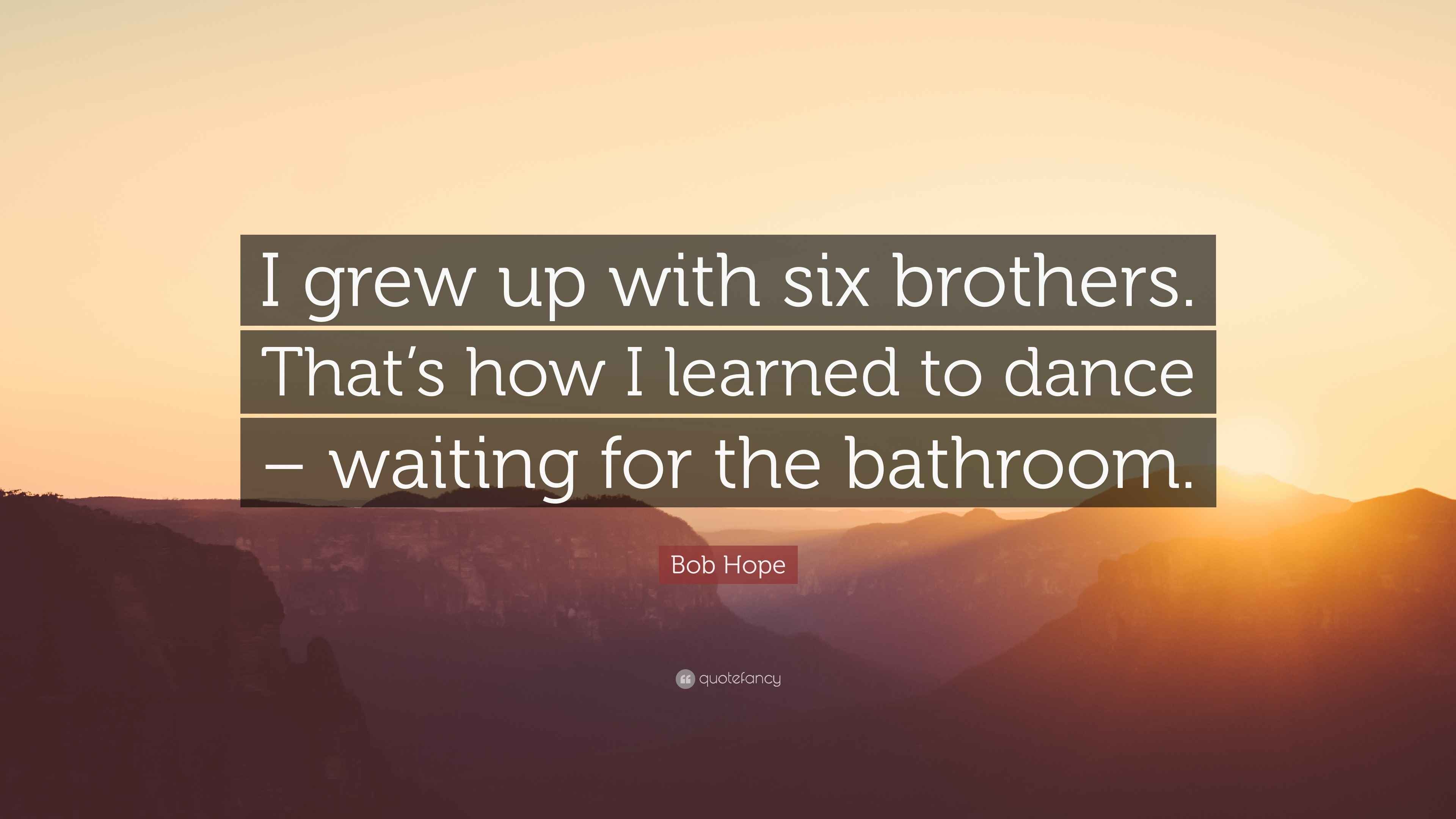
Growing up in a crowded household isn’t just about sharing bathrooms and hand-me-downs—it’s a masterclass in timing, survival, and wit. When Bob Hope quipped, “I grew up with six brothers. That’s how I learned to dance—waiting for the bathroom,” he wasn’t just telling a joke. He was revealing the roots of his comedic genius, his resilience, and his perspective on life’s complexities. This single line, often shared as a “quote of the day,” carries far more than punchline value. It’s a lens into how early family dynamics shape how we navigate relationships, age with grace, and engage with politics—all wrapped in laughter.
Behind the chuckle lies universal truth: our upbringing molds how we move through the world. Hope’s experience wasn’t unique in structure—many have grown up in large families—but his ability to extract wisdom and humor from it made his voice timeless. Let’s unpack the substance behind the smirk.
The Comedy of Survival: How Crowded Homes Build Character
Large families are pressure cookers of personality development. With six brothers, Bob Hope didn’t just learn to wait—he learned to negotiate, anticipate, and adapt. The bathroom line wasn’t just about hygiene; it was a daily rehearsal for life’s social rhythms.
In homes like his, humor wasn’t a luxury—it was a survival tool. A well-timed joke could defuse tension, earn favor, or secure an extra slice of pie. For Hope, comedy became his currency. He didn’t just entertain audiences; he translated childhood survival tactics into stagecraft.
Consider this: - Timing—Waiting for the bathroom taught rhythm. In comedy, timing is everything. Hope’s ability to pause, deliver, and land a punchline was forged in those hallway standoffs. - Observation—In a crowded house, you learn to read people quickly. Who’s in a bad mood? Who’s bluffing? This hyper-awareness fed his sharp observational humor. - Resilience—Getting shoved aside or ignored builds thick skin. Hope’s ability to weather criticism and stay relevant for decades stems from early emotional conditioning.
Modern psychologists affirm this. Studies show that children from large families often develop stronger social intelligence and conflict-resolution skills. Hope didn’t just survive—he weaponized his upbringing into a career.
Brotherhood as a Blueprint for Relationships
Hope’s quote hints at more than bathroom lines—it speaks to the intricate dance of male relationships. Six brothers mean six rivalries, six alliances, six mirrors reflecting different versions of masculinity.
In such environments, loyalty is earned, not given. You learn who has your back during family arguments, who’ll take the blame for a broken window, and who’ll laugh with you when the joke’s on you. These dynamics lay the groundwork for adult relationships.

For Hope, this meant: - Trust through shared struggle—Growing up competing for attention and resources forged deep bonds. Adult friendships often mirror these early loyalties. - Hierarchy and humility—Birth order matters. Whether you were the eldest enforcer or the youngest negotiator, you learned your role—and when to step outside it. - Communication through humor—Direct confrontation is risky in tight spaces. Jokes become code. A tease might mean affection; sarcasm, concern. Hope mastered this language early.
Today, many struggle with emotional expression in relationships. Hope’s example suggests that humor, when rooted in authenticity, can be a bridge—not a barrier—to connection.
Aging with Grace: Lessons from a Lifelong Performer
Hope’s career spanned over 70 years. He entertained troops in World War II, hosted the Oscars 19 times, and remained a cultural fixture well into his 90s. His longevity wasn’t accidental—it was a product of mindset.
The boy who learned to “dance” while waiting became a man who stayed light on his feet. Aging, for Hope, wasn’t about decline. It was about adaptation.
Key principles from his life: - Stay useful—Hope didn’t retire. He kept performing for troops, proving value at every stage. - Keep laughing—His humor evolved but never disappeared. He joked about aging, politics, and technology, refusing to be sidelined by irrelevance. - Move forward—The act of “waiting” taught patience, but also momentum. You don’t linger—you step into the space when it’s yours.
Contrast this with modern fears of aging: obsolescence, invisibility, loss of control. Hope’s life suggests that relevance isn’t granted—it’s maintained through presence, purpose, and punchlines.
Politics and Punchlines: Navigating Power
with Humor
Hope was no stranger to politics. He performed for every U.S. president from Franklin D. Roosevelt to Bill Clinton, often roasting them on stage with bipartisan wit. His political humor wasn’t about taking sides—it was about holding power lightly.
His famous USO tours brought laughter to war zones, offering soldiers relief and reminding leaders of their humanity. He understood that comedy could cross battle lines when speeches couldn’t.
How did his upbringing inform this? - Neutrality under pressure—In a house of six brothers, taking sides could backfire. Hope learned to navigate conflict without burning bridges. - Authority with a wink—He respected power but never feared it. Just as he’d tease an older brother, he’d rib a president—always with respect beneath the jabs. - Humor as diplomacy—Laughter disarms. Hope used it to connect, not divide. In today’s polarized climate, his approach feels both nostalgic and urgently needed.
Modern political discourse often lacks this balance. Comedy has become weaponized, used to attack rather than illuminate. Hope’s model offers a counterpoint: humor that challenges without humiliating.
The Hidden Discipline Behind the Joke
It’s easy to dismiss Hope’s quote as a one-liner. But behind every “I learned to dance waiting” moment was a lifetime of discipline.
Comedy of his caliber isn’t spontaneous. It’s rehearsed, refined, and rooted in experience. The “dance” wasn’t just physical—it was strategic. He learned to: - Read the room—A joke that works with brothers may not land with a general. Context is king. - Fail fast—Not every punchline worked. Hope’s resilience came from brushing off flops and moving on. - Stay relevant—He updated material constantly, adapting to new audiences and eras.
This is a lesson for anyone building a personal brand, career, or creative practice. Longevity isn’t about staying the same—it’s about evolving without losing your voice.
Why This Quote Still Resonates Today
In an age of curated perfection, Hope’s quote stands out for its authenticity. It’s humble, self-deprecating, and deeply human. It doesn’t glorify struggle—it reframes it.
People share this quote because it feels true. It speaks to: - The universality of waiting—Whether it’s a bathroom, a promotion, or a breakthrough, we’re all waiting for something. - Finding joy in constraint—Hope didn’t complain about the chaos. He found rhythm in it. - The power of perspective—You can see overcrowding as a burden or as training. Hope chose the latter.
In wellness circles, they call this “reframing.” In comedy, it’s just called good material. Hope did both without labeling it.
Practical Takeaways: Applying Hope’s Wisdom
You don’t need six brothers to benefit from this mindset. Here’s how to integrate his lessons:
- Use humor as a tool, not a shield
- Don’t joke to avoid feelings—joke to process them. A well-placed quip can ease tension without dismissing seriousness.
- Embrace the wait
- Instead of resisting delays, use them. Hope “danced” while waiting. What can you learn, observe, or prepare during your downtime?
- Stay agile in relationships
- Whether with family, partners, or colleagues, practice emotional improvisation. Not every moment needs resolution—sometimes, a laugh is enough.
- Age with purpose
- Define relevance on your terms. It’s not about staying young—it’s about staying engaged.
- Engage politics without losing humor
- You can care deeply and still laugh at absurdity. Hope proved you don’t have to choose between conviction and levity.
Final Thought: Keep Dancing
Bob Hope’s legacy isn’t just in his awards or appearances—it’s in the quiet resilience he modeled. He turned childhood chaos into comedic precision, personal philosophy, and public service.
The next time you’re stuck in line, delayed, or navigating a messy relationship, remember: waiting isn’t wasted time. It’s practice. It’s where you learn your steps. It’s where, if you’re clever, you start to dance.
FAQ
What did Bob Hope mean by “I learned to dance waiting for the bathroom”? He used humor to describe growing up in a large family, where constant waiting taught him timing, patience, and adaptability—skills that later defined his comedic rhythm.
How did Bob Hope’s family influence his comedy? With six brothers, he learned early to use humor to navigate conflict, gain attention, and build alliances—core elements of his stage persona.
Did Bob Hope serve in the military? No, he wasn’t enlisted, but he famously performed for U.S. troops overseas in multiple wars, becoming a symbol of morale support.
What was Bob Hope’s view on aging? He embraced aging with humor and purpose, staying active in entertainment and public life well into his 90s.
How did Bob Hope handle political humor? He joked about politicians across parties with wit, not malice, using comedy to unite rather than divide.
Was Bob Hope’s quote about brothers real? Yes—he had five brothers and one sister. The “six brothers” line was a slight exaggeration for comedic effect.
Why are Bob Hope’s quotes still popular today? They combine timeless humor with practical wisdom, resonating across generations about family, resilience, and life’s everyday struggles.
FAQ
What should you look for in Bob Hope's Life Lessons: Humor, Family, and Wisdom? Focus on relevance, practical value, and how well the solution matches real user intent.
Is Bob Hope's Life Lessons: Humor, Family, and Wisdom suitable for beginners? That depends on the workflow, but a clear step-by-step approach usually makes it easier to start.
How do you compare options around Bob Hope's Life Lessons: Humor, Family, and Wisdom? Compare features, trust signals, limitations, pricing, and ease of implementation.
What mistakes should you avoid? Avoid generic choices, weak validation, and decisions based only on marketing claims.
What is the next best step? Shortlist the most relevant options, validate them quickly, and refine from real-world results.