Growing up in a crowded household isn’t just about争夺 bathroom time or sharing hand-me-downs—it’s survival. For Bob Hope, one of America’s most enduring entertainers, growing up with six brothers wasn’t just a fact of life; it was the foundation of his wit, timing, and worldview. His famous quip—“I grew up with six brothers. That’s how I learned to dance—waiting for the bathroom.”—is more than a punchline. It’s a lens into how early family dynamics shape perspectives on relationships, aging, and even politics.
This quote, often shared as a “quote of the day,” resonates because it’s funny, relatable, and layered. On the surface, it’s a zinger about sibling rivalry and cramped quarters. Dig deeper, and it reveals how humor becomes both shield and strategy in high-stakes personal environments. Let’s unpack how this single line reflects broader truths about life—through the eyes of a man who spent decades observing human nature from center stage.
The Humor in Chaos: Brotherhood as a Training Ground
Bob Hope was born Leslie Townes Hope in 1903, one of seven sons. In a household like that, space, silence, and privacy were luxuries no one expected. What they did develop was timing—both comedic and social.
Learning to “dance” while waiting wasn’t literal ballroom—it was the art of deflection, patience, and reading the room. When six other boys are also trying to get out the door, be heard at dinner, or claim the last piece of toast, you either learn to stand out or get trampled.
This environment forged Hope’s comedic rhythm. His ability to deliver a one-liner at just the right moment, to undercut tension with a joke, came from years of navigating sibling battles where words were weapons and laughter was leverage.
Real-life example: Think of a family gathering where everyone talks over each other. The person who times their joke perfectly—after a pause, mid-argument, or right when tension peaks—is using the same survival skill Hope honed in his youth. It’s not just comedy. It’s emotional intelligence disguised as wit.
Relationships: What Siblings Teach Us About Love
Hope’s quote may be about brothers, but its implications stretch into romantic relationships. People often say “you marry your family,” meaning the dynamics we grow up with subtly shape our expectations in partnerships.
In a home with six brothers, competition was constant. But so was camaraderie. There were no sisters in Hope’s immediate family, which meant emotional expression, conflict resolution, and affection were likely filtered through a masculine, often humorous, lens.
This influenced how he approached relationships: - Conflict as routine: Arguments weren’t catastrophic—they were part of the rhythm. That resilience can benefit long-term relationships. - Humor as diplomacy: A joke could defuse a fight over chores, clothes, or bathroom time. In marriage, that same skill can prevent small issues from escalating. - Shared space as normal: Intimacy isn’t just emotional—it’s physical. Sharing a room, a bathroom, a life with others teaches compromise.

But there’s a caveat. Relying too heavily on humor can become avoidance. Hope was known for his light touch, but he wasn’t always open about deeper emotional struggles. His marriage to Dolores Hope lasted 69 years, but accounts suggest she often handled the emotional labor while he stayed in performance mode.
Common mistake: Using humor to sidestep serious conversations—“Let’s just laugh it off”—can work short-term but erodes trust over time. The balance is knowing when to dance and when to sit down and talk.
Aging with Grace: Lessons from a 100-Year Life (Almost)
Bob Hope lived to be 100 years old—dying in 2003, just weeks after his centenary. His longevity wasn’t just genetic; it was behavioral. And much of that behavior was rooted in the adaptability he learned young.
Growing up with six brothers meant: - Resilience under pressure. - Constant adaptation to others’ needs. - Finding joy in small moments.
These are not just survival skills—they’re anti-aging strategies.
As people age, social isolation becomes a major risk. Hope never faced that. His career kept him connected, but his upbringing ensured he thrived on interaction. He didn’t just perform for troops—he visited them, joked with them, listened. That ability to engage, even in difficult environments, came from a lifetime of navigating complex group dynamics.
Practical insight: Older adults who maintain strong social ties live longer, healthier lives. The “dance” Hope learned—waiting, observing, stepping in at the right time—is exactly what helps seniors stay engaged without dominating the conversation.
Hope’s later years were marked by controversy—accusations of being out of touch, politically rigid, even sexist. But his ability to keep working, keep smiling, and keep showing up speaks to a kind of emotional stamina few achieve.
Politics and Perspective: Comedy as Commentary
Hope was a vocal conservative, a Republican supporter, and a frequent performer for U.S. troops overseas. His political views were shaped by his era, his values, and yes—his upbringing.
In a household of seven boys, hierarchy mattered. There was order, even if it was unspoken. That respect for structure translated into his worldview: patriotism, tradition, and a certain skepticism of rapid change.
His famous USO tours weren’t just entertainment—they were political statements. By showing up for soldiers in Vietnam, Korea, and the Middle East, he aligned himself with military service as a noble duty. Critics said he avoided criticizing war; supporters said he honored sacrifice.
But again, his humor was the vehicle. He never gave sermons. He gave punchlines—often at the expense of generals, politicians, and even the President.
Example: During a 1981 USO show, just weeks after Ronald Reagan’s attempted assassination, Hope joked: “I’ve been shot at before—by critics.” The line landed because it acknowledged danger without fear, a tone likely honed in a household where you had to be sharp to be heard.
The lesson? Humor can challenge power—but only if it’s disarming first. Hope mastered that balance.
Why This Quote Still Resonates Today
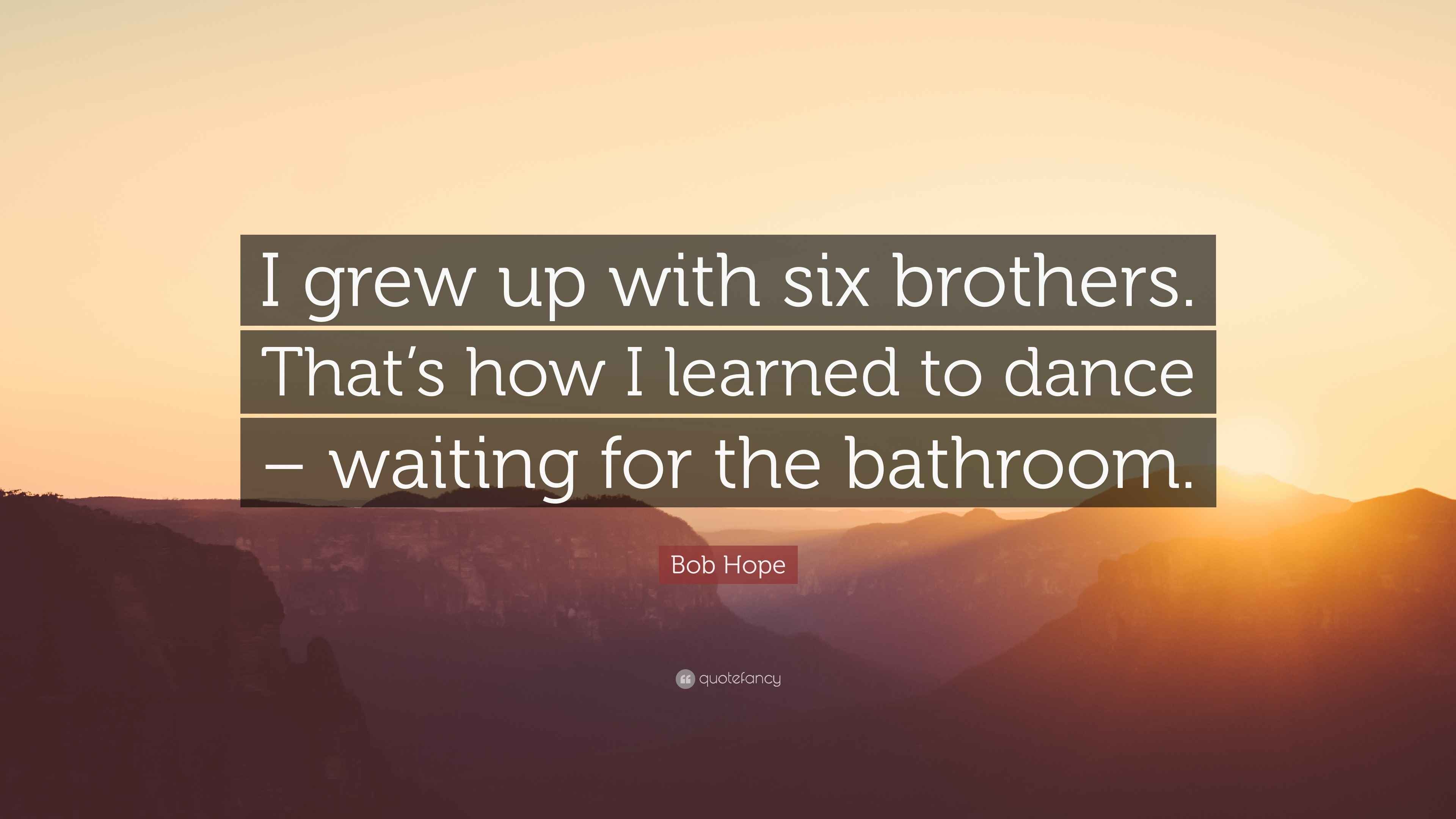
“I grew up with six brothers. That’s how I learned to dance—waiting for the bathroom.”
It’s short. It’s funny. But its staying power comes from truth.
In an age of curated lives, digital personas, and emotional oversharing, Hope’s quote feels refreshingly honest. It doesn’t claim wisdom—it reveals it through irony.
We laugh because we recognize the scenario. Maybe you didn’t have six brothers, but you had a tiny apartment, a loud family, or a job where you had to “wait your turn.” The dance isn’t just physical—it’s emotional, professional, relational.
And in a culture increasingly divided on relationships, aging, and politics, Hope’s approach offers a template: - Stay light, but not shallow. - Engage, but don’t escalate. - Use timing—know when to step in, when to step back.
That’s the real lesson behind the laugh.
How to Apply Bob Hope’s Wisdom in Modern Life
You don’t need six brothers to benefit from this mindset. Here’s how to adopt the “dance” in your daily life:
- In relationships: Use humor to connect, not deflect. A well-timed joke can ease tension—but follow it with presence.
- At work: Learn to read the room. The person who speaks last often has the most impact. Wait. Listen. Then contribute.
- With aging parents or kids: Recognize that shared space requires rhythm. Don’t bulldoze—sync.
- In political conversations: Lead with humor, not hostility. Hope mocked politicians but rarely people. There’s a difference.
- In personal growth: Embrace chaos as training. Crowded environments build adaptability—the most underrated life skill.
Hope’s life wasn’t perfect. His career overshadowed his personal presence. His politics didn’t evolve with the times. But his ability to keep moving—to keep dancing—through decades of change is worth studying.
Final Thought: Keep Dancing
Bob Hope’s bathroom line isn’t just a quote of the day. It’s a metaphor for living well in a crowded world. Whether it’s family, work, or society, we’re all waiting our turn. The question isn’t whether you’ll get your moment—it’s how you’ll spend the time before it.
Will you grow impatient? Resentful? Or will you learn the steps, stay light on your feet, and make people laugh while they wait?
That’s the real legacy of Bob Hope. Not the awards, the movies, or the controversies. It’s the reminder that sometimes, the best way to survive life’s chaos is to dance in line.
FAQ
What did Bob Hope mean by “I learned to dance waiting for the bathroom”? He meant that growing up with six brothers taught him timing, patience, and humor—skills essential for both survival and comedy.
How many brothers did Bob Hope have? Bob Hope had six brothers, making him one of seven sons in his family.
Did Bob Hope have a close relationship with his brothers? Accounts suggest the brothers were close in childhood, though they drifted apart in adulthood as careers and families developed.
How did Bob Hope’s upbringing influence his comedy? His competitive, crowded home life sharpened his timing and ability to command attention—key traits in stand-up and television.
What were Bob Hope’s views on aging? He remained active and performing well into his 90s, believing in staying engaged, working, and using humor to cope with aging.
Was Bob Hope political? Yes. He was a Republican supporter and performed for troops as a form of patriotic expression, often incorporating political jokes into his acts.
Why do people still quote Bob Hope today? His humor was sharp, relatable, and timeless—able to address complex topics through simplicity and wit.
FAQ
What should you look for in Bob Hope’s Quote on Brothers and Life Lessons Explained? Focus on relevance, practical value, and how well the solution matches real user intent.
Is Bob Hope’s Quote on Brothers and Life Lessons Explained suitable for beginners? That depends on the workflow, but a clear step-by-step approach usually makes it easier to start.
How do you compare options around Bob Hope’s Quote on Brothers and Life Lessons Explained? Compare features, trust signals, limitations, pricing, and ease of implementation.
What mistakes should you avoid? Avoid generic choices, weak validation, and decisions based only on marketing claims.
What is the next best step? Shortlist the most relevant options, validate them quickly, and refine from real-world results.